Paid, owned and earned media are the three media types of the POEM model that companies use to reach their target audience. In short: you rent paid media, you own owned media, and you earn earned media. Here you’ll learn how the three differ and how to combine them for greater visibility in Google and AI search.
What is paid media?
Paid media (also known as “bought media”) covers all advertising space and reach that you pay for. As soon as money changes hands for a placement, it’s paid media – no matter how editorial the content looks.
Typical examples include:
Search engine advertising (SEA) such as Google Ads
Paid media works immediately, but stops when the budget runs out. Ideally, you use it to drive traffic to your owned media.
What is owned media?
Owned media covers all communication channels that your company runs itself and fully controls in terms of content. You don’t pay for placement – the only costs come from creating and maintaining the content.
Social media profiles are a special case: you decide on the content, but the platform controls reach and rules. That’s why many people call them rented media. Your most important owned media asset remains your own website.
What is earned media?
Earned media is reach that third parties give your brand voluntarily – without payment and without your direct control. Because the recommendation comes from an independent source, earned media is considered the most credible media type.
Mentions in AI answers from ChatGPT, Perplexity or Google AI Overviews
Earned media still isn’t free, though: to earn mentions, you invest in great content, PR work and convincing products.
What is the difference between paid, owned and earned media?
The difference comes down to control, cost and credibility: the more you control a message, the less credible it seems – and vice versa.
Criterion
Paid Media
Owned Media
Earned Media
Principle
you rent it
you own it
you earn it
Control
medium to high
high
low
Cost
budget per click or placement
creation and maintenance
indirect (content, PR, service)
Credibility
rather low
medium
high
Strength
instant reach, precise targeting
long-term value, independent of budgets
trust, new audiences, backlinks
Weakness
stops when the budget runs out
reach takes time to build
hard to control, criticism possible
Examples
Google Ads, social ads
website, blog, newsletter
press, reviews, AI mentions
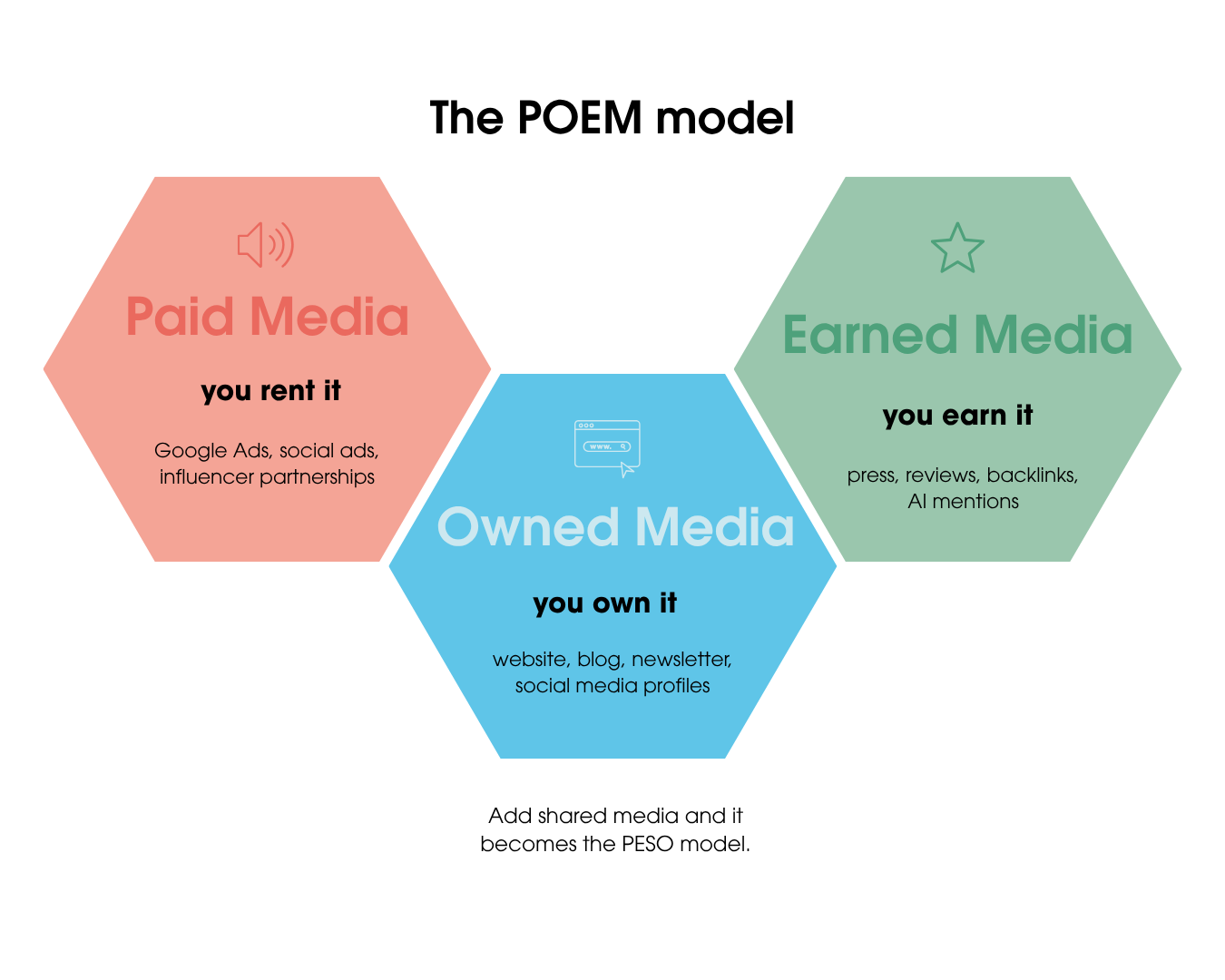
Figure 1: The POEM model, source: eology
What is the PESO model?
The PESO model extends paid, owned and earned media with shared media – content that your community shares and spreads on social media. Shared media therefore sits between owned and earned media.
How do paid, owned and earned media work together?
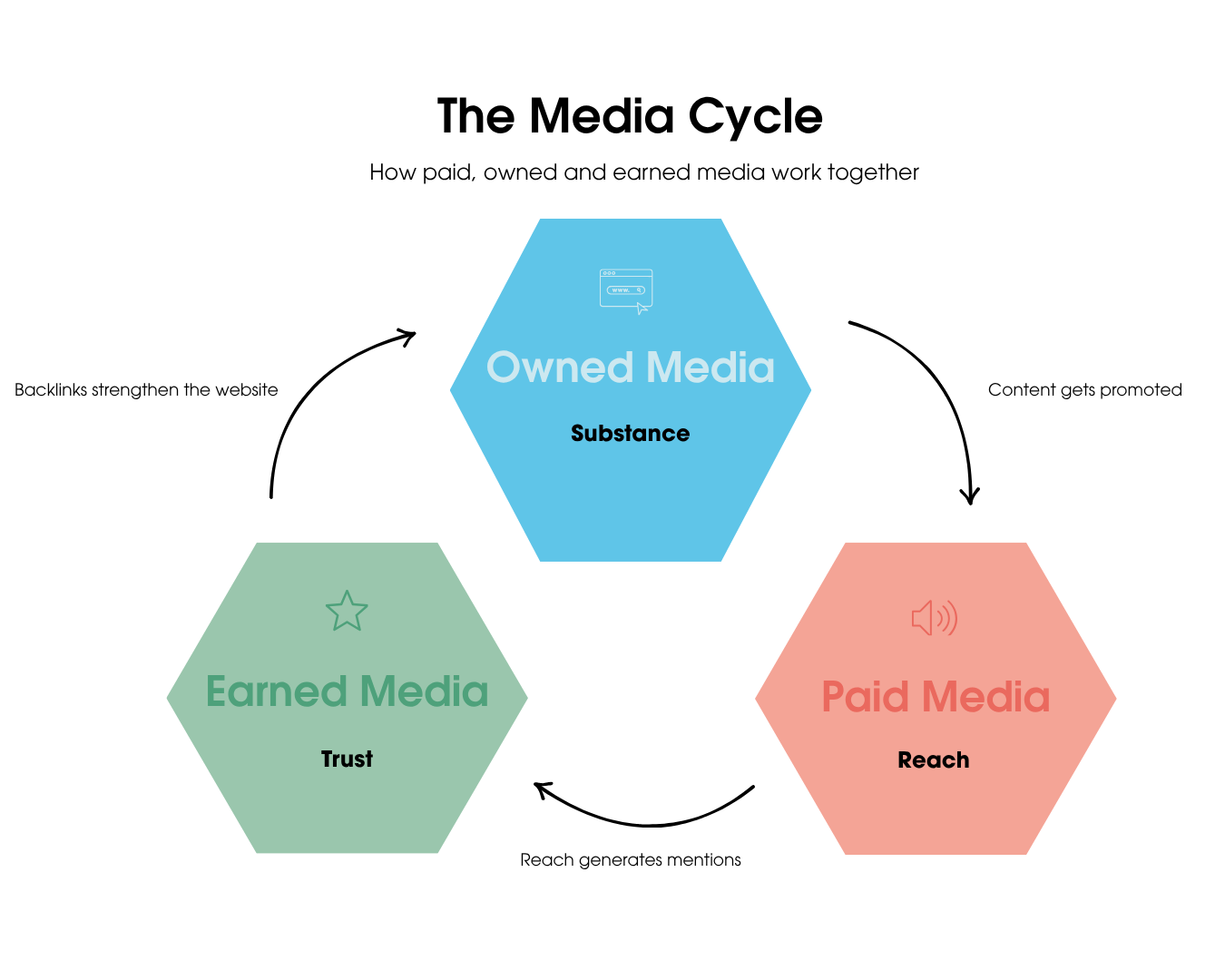
The three media types are strongest when combined – an approach also known as converged media:
Owned media provides the substance: without good content, there’s nothing for others to talk about.
Paid media accelerates reach: ads quickly put your content in front of the right audience.
Earned media validates the message: independent voices make your brand credible.
An example: you publish an industry study on your website (owned) and promote it with LinkedIn Ads (paid). Trade media pick up the figures, link to the study, and AI systems cite your brand as a source (earned). The new backlinks in turn strengthen your website. Ads (Paid). Fachmedien greifen die Zahlen auf, verlinken die Studie und KI-Systeme nennen Deine Marke als Quelle (Earned). Die neuen Backlinks stärken wiederum Deine Website.
Figure 2: The media cycle, source: eology
What role do paid, owned and earned media play in SEO and AI search?
Owned media is the foundation: only your own website can rank and be cited as a source by AI systems. Clear definitions, FAQs and proprietary data increase your chances.
Earned media is the proof of trust: backlinks, press mentions and reviews are authority signals – for Google as well as for large language models. The more often your brand appears in relevant sources, the more likely it is to be mentioned in AI answers.
Paid media is not a ranking signal: ads don’t directly improve your organic rankings, but they put your content in front of an audience that shares and links to it.
Many companies don’t know how often they appear in AI answers: only 16 percent of brands systematically track their AI visibility. This is where a GEO audit and AI visibility monitoring can help.
What is earned media value?
Earned media value (EMV) expresses the value of earned media in monetary terms. It shows what the same reach would have cost as paid advertising. It is mainly used in PR and influencer marketing.
How do you calculate earned media value?
In its simplest form, you multiply reach by a comparable advertising rate:
If a press article generates 200,000 impressions and the CPM of comparable ads is €15, that equals an EMV of €3,000.
Is earned media value meaningful?
Only to a limited extent. EMV measures reach, not the impact or quality of a mention. More meaningful metrics include backlinks, share of voice, sentiment and mentions in AI answers, as well as the traffic and leads that earned media brings to your website.
Conclusion: think paid, owned and earned media together
Paid media gives you fast reach, owned media a sustainable foundation and earned media the trust that no ad can buy. No media type works on its own in the long run. In the age of AI search, this matters more than ever: if you earn mentions in credible sources with strong content of your own, you’re more likely to be recommended by ChatGPT and Google AI Overviews.gilt mehr denn je: Wer mit starken eigenen Inhalten Erwähnungen in glaubwürdigen Quellen verdient, wird auch von ChatGPT und den Google AI Overviews empfohlen.
CPO stands for cost per order and is part of online marketing, among other things. The CPO is a subsection of the cost per action and describes all costs incurred for a sale, order or lead. The order costs include all costs incurred for advertising measures, subscriptions and mandatory costs for shipping. ... Continue readingCPO (Cost per Order)
The WDF*IDF analysis is an important component for good texts and effective SEO. But how exactly does the formula work and what should be paid attention to? ... Continue readingWDF*IDF
Google PageRank is an algorithmic evaluation system for the linking structure of a website in order to draw conclusions about how important it is for users and the search engine. The method is based on a logarithmic function and the usage behavior of an average Internet surfer. ... Continue readingPageRank
Du möchtest mehr über spannende Themen der Branche erfahren?
You are currently viewing a placeholder content from Hubspot Embedded Content. To access the actual content, click the button below. Please note that doing so will share data with third-party providers.
You are currently viewing a placeholder content from HubSpot. To access the actual content, click the button below. Please note that doing so will share data with third-party providers.
You are currently viewing a placeholder content from Hubspot Meetings. To access the actual content, click the button below. Please note that doing so will share data with third-party providers.