

Footer
The footer is an important element of every website. Nevertheless, it is often treated stepmotherly. But especially for SEO and the user experience, a good footer is very relevant. ... Continue readingFooter

Unlike the frontend, which is about all the actual visible processes on the user interface, the backend is the data processing and storage that takes place in the background. It thus forms the basis for the frontend and is an essential component of CMS-based websites.
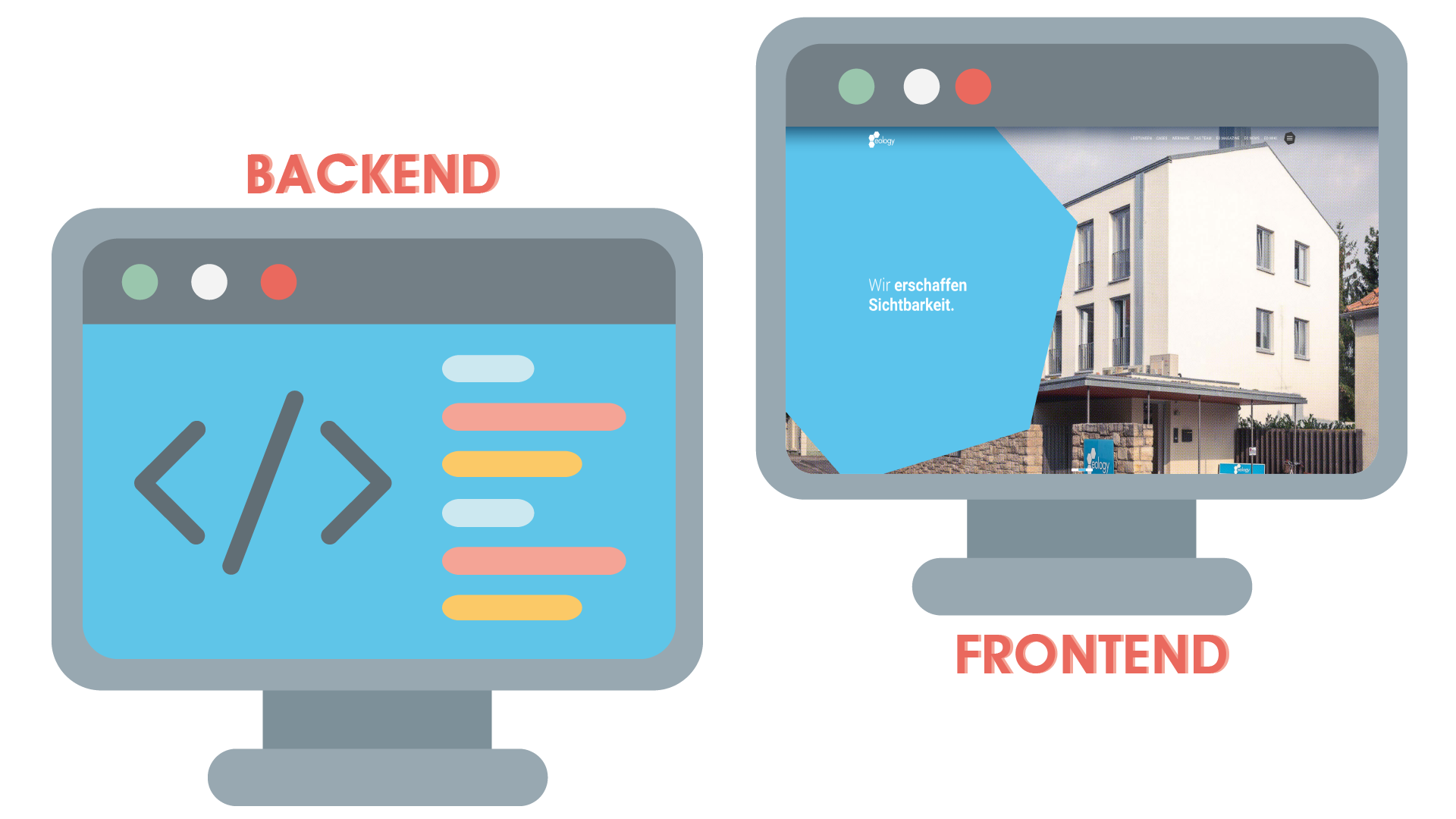
Thus, the backend is responsible for building a website or software, while the frontend is there for the presentation. Since the backend is where the data and content of a website is maintained, it is also known as the administrative part. These are the components of the backend:
The backend is divided into two parts: One where only the administrators of the site have access and one where the users themselves can access.
This area is usually password protected and can really only be managed by the programmers and administrators of the site. It is used for content maintenance and programming of the site itself and gives the site its final design.
As a user you can also have access to the backend. However, you will never be able to change the content or the design of the website. The area you can edit are accounts like:
Customer areas where you can manage payment terms, your address or anything else are also part of this user backend area. This particular part of the backend is also protected, so you usually assign a username and password here.
With the help of the backend you can modify and customize your website. Therefore it is a very important part if you want to optimize your site for search engines. As part of OnPage optimization, you can influence various factors to improve your site’s ranking. Therefore use the following tips:

There are different areas that you have access to in your backend. You have the following tasks:
The footer is an important element of every website. Nevertheless, it is often treated stepmotherly. But especially for SEO and the user experience, a good footer is very relevant. ... Continue readingFooter
AI hallucinations are false, fabricated or misleading content generated by AI models because they are based on probabilities rather than fact-checking. Find out more here! ... Continue readingAI hallucinations
Good brand building strengthens your brand and creates a brand identity that your customers can trust. Find out more here. ... Continue readingBrand Building
You want to learn more about exciting topics?
You are currently viewing a placeholder content from Hubspot Embedded Content. To access the actual content, click the button below. Please note that doing so will share data with third-party providers.
More InformationYou are currently viewing a placeholder content from HubSpot. To access the actual content, click the button below. Please note that doing so will share data with third-party providers.
You are currently viewing a placeholder content from Hubspot Meetings. To access the actual content, click the button below. Please note that doing so will share data with third-party providers.
More Information


