In the world of online marketing, SEO and social media social media are increasingly merging into a single discipline known as Social SEO. This innovative approach aims to improve visibility and rankings in both traditional and social search engines by effectively utilising already established SEO strategies. Find out exactly what social SEO is, why it is becoming essential for businesses of all sizes and how you can optimise your social media activities to support your SEO goals. Learn how search engine optimisation and social media work together to boost your brand’s online presence.
Social SEO refers to the integration of search engine optimisation (SEO) into your social media strategy to improve visibility in your website’s search results and on all social platforms. While traditional SEO focuses on search engines like Google and Bing, social SEO expands the focus to social platforms like Instagram, TikTok, YouTube and even LinkedIn. By using keywords with the right keyword density the right structure and a holistic strategy, it will help your unique content more visible and easier to find. This way you can make your brand more prominent in the digital space.
The dynamics behind social SEO
The core concept of social SEO lies in utilising the interactions between social media and your website. Social media provides a platform for the distribution of content, the generation of user interactions and the building of a community. These factors directly and indirectly influence the SEO performance of your website or content:
- Direct influences: Although social signals (such as likes, shares and comments) are not officially confirmed as direct ranking factors by search engines such as Google, they contribute to increasing the coverage and visibility of content. More visibility can lead to an increase in backlinks as more users share and link to the content, which in turn is a recognised ranking factor.
- Indirect influences: Presence and activity on social media platforms can increase brand awareness. A strong brand is searched for more frequently and these search queries can signal to search engines that a brand or company is relevant, which in turn can have a positive influence on rankings.
Visions and goals of social SEO
The strategic importance of social SEO lies in its ability to achieve two main goals: Improving search results through social interactions and increasing user engagement through consistent presence on social networks. Companies can use this strategy to:
- Generate traffic: Companies can increase traffic through targeted posts and campaigns on social media that draw attention to relevant and valuable content on the company website.
- Promote engagement: Regular interaction with users on social platforms can increase engagement and build long-term customer relationships.
- Collect customer feedback: Social media provides a direct line to customers to quickly gather their opinions and feedback on products or services.
The importance of social signals in the context of SEO
Social signals , i.e. signals such as likes, shares, comments, and general interaction with social media content, are playing an increasingly important role as ranking factors for search engines. These user signals give search engines clues as to how relevant and valuable content is for the target audience. A strong, interactive social media presence can therefore indirectly influence your website’s position in search results.
SEO can also influence the visibility of social media content itself. By strategically including keywords in posts, profile descriptions and hashtags, this content can be better recognised by search engines and displayed in search results. This not only improves the overall visibility of the brand, but can also lead to more traffic on the respective platforms.
The right choice and placement of keywords are crucial as they help content reach those actively searching for related topics. For example, including specific, industry-relevant hashtags in posts on Instagram or Twitter can result in those posts ranking higher in search results on those platforms. This increases the likelihood that more users will see the posts, which in turn can lead to higher engagement and more followers.
In addition to keyword optimisation, consistency in communication across all social media channels is important. By creating a unified brand image that utilises clear messaging and visually appealing content, a company can strengthen its online presence and increase its credibility. Search engines also recognise this consistency, which can have a positive impact on rankings.
SEO optimisation for social media also includes regularly updating profile information and publishing fresh content that picks up on current keywords. This signals to search engines that the profile is active and always provides relevant information, which also helps to improve search rankings.
Through these targeted social SEO measures, brands can extend the reach of their social media content and ensure that their messages are seen by a larger and more relevant audience. This is a key advantage in an increasingly connected world where the lines between SEO and social media are becoming increasingly blurred.
Key strategies for optimising social media in the SEO context
To use social media effectively for SEO purposes, you should consider the following strategies:
Efficient content management on social media
An effective content structure on your social media channels is essential to increase both visibility and engagement. Consider the following points:
- Target group analysis: Understand your target group precisely and create content that appeals to their needs and interests.
- Keyword integration: Use relevant SEO keywords in your social media posts to increase findability.
- Regular activities: Post regularly and stay active to encourage interaction and strengthen your online presence.
Networking and link building
To effectively measure the success of your social SEO strategy, it is important to continuously monitor social signals. Tools like Google Analytics allow you to track traffic from social networks and analyse which platforms and content perform particularly well. In addition, tools like Hootsuite or Buffer can give you detailed insights into interactions on your social media channels, such as likes, shares and comments. These metrics are crucial for understanding which content resonates with your audience and how you can adapt your strategy. By using UTM parameters, you can also track exactly which social media campaigns are driving traffic. Regular analysis of important metrics such as engagement rate, dwell time and conversion rate will give you valuable insights to continuously improve your social media marketing and increase organic traffic to your website.
This data-driven approach will help you make informed decisions and ensure that your social SEO strategy remains successful in the long term. Integrate these practices into your workflow:
- Cross-promotion: Link between your website and your social media profiles to increase traffic.
- Influencer collaborations: Work with influencers to expand your reach and generate valuable backlinks.
Dynamic analysis and continuous adjustments
Continuous monitoring and adjustment of your social media strategy is necessary to ensure and improve its effectiveness. Integrate these practices into your workflow:
- Monitoring: Monitor visitor behaviour and interactions on your channels to measure the effectiveness of your strategy.
- Adapt the strategy: Use the insights gained to constantly improve your content and campaigns.
Integrating social media into the company website is a further step towards improving your overall visibility. There are various ways in which you can effectively integrate social networks into your website to encourage interaction and create a synergy effect.
- Social sharing buttons: Implement social sharing buttons on your website, for example in the footer especially in blog posts and on product pages. This makes it easier for visitors to share your content on their social media profiles, which in turn increases visibility and generates more traffic.
- Social media feeds: Integrate feeds from your social media channels directly on your website. This shows how up-to-date your social activities are and can increase the time spent on the page.
Examples of successful integration: Oakland Zoo
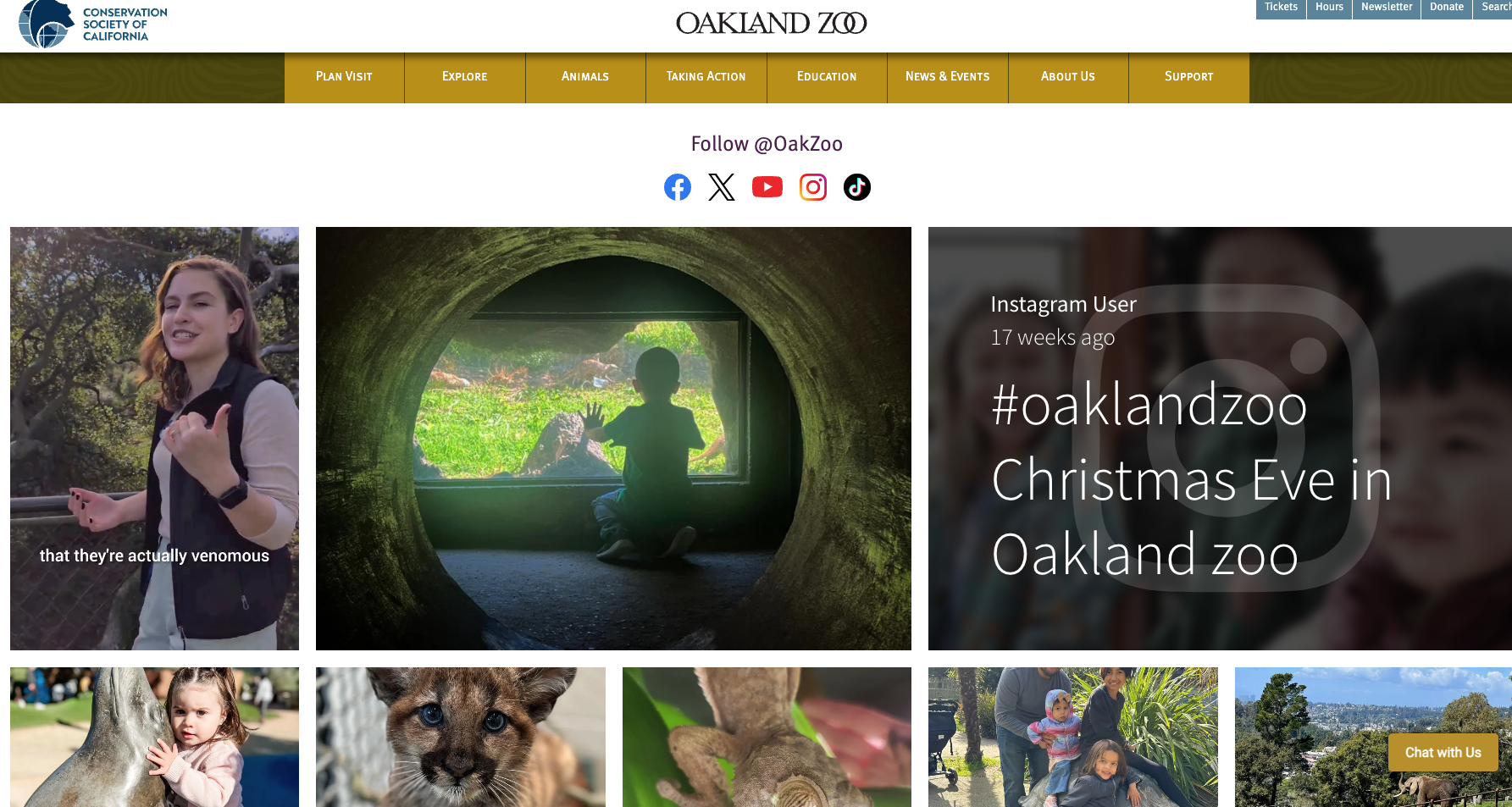
The Oakland Zoo has effectively integrated social media into its website to attract visitors and encourage interaction. At the zoo’s main entry plaza, live video feeds from various social networks such as Twitter, TikTok and directly posted content are displayed on a large screen. This user-generated content helps to create a positive atmosphere and welcome visitors as they enter the zoo. In addition, a social media feed is permanently embedded in the zoo’s homepage. Visitors only need to scroll down the homepage to see recent posts and updates that showcase the dynamic and engaged community around the zoo. This strategy harnesses the power of social media to enrich the visitor experience while strengthening the zoo’s online presence.
Each social media platform requires its own approach to be optimally used for SEO. Instagram, TikTok and YouTube are particularly important for social SEO. Instagram is ideal for brands to share visual content and foster strong community interaction. TikTok, with its viral trends and young target audience, offers an excellent platform for quickly generating reach. YouTube, in turn, is the second largest search engine worldwide and indispensable for long-lasting video content that can both entertain and inform. LinkedIn plays a more specific role, but it is important for publishing professional content and B2B marketing. The following table offers you specific tips on how to optimise your content for SEO on the most important social channels:
Platform | SEO tips | Details |
|---|
Facebook | Optimised posts and profile information | Use relevant keywords in your page description and post texts. Interact regularly with your community to increase engagement (likes, shares, comments), as this increases visibility. |
Instagram | Hashtags and shopping | Use strategic hashtags that match your content to increase discoverability. Use Instagram Shopping to directly link to products and generate traffic. |
TikTok | Optimise content for discovery | Make sure your video descriptions, hashtags and in-app titles include keywords that match your content. Create interactive content that encourages engagement and shares to be favoured by the algorithm. |
YouTube | Keyword optimisation and video descriptions | Use relevant keywords in your video titles, descriptions and tags. Aim for high engagement rates (likes, comments, playback time), as these are factored into YouTube’s ranking. |
LinkedIn | Optimise your LinkedIn profile and posts | Use keywords that are relevant to your industry in your profile and posts. Publish regular blog articles and updates to improve your visibility in search engines and in LinkedIn feeds. |
Table 1: Platform-specific social SEO strategies
Harnessing the power of social SEO
Social SEO is a powerful strategy for expanding the reach of your brand beyond the boundaries of traditional search engine optimisation. Through the targeted use of social media, you can not only improve your visibility in search results, but also build a closer relationship with your target audience. Implement the above tactics to make the most of your social media channels to support your SEO goals.
This might also interest you