{
“@context”: “https://schema.org”,
“@type”: “FAQPage”,
“mainEntity”: [
{
“@type”: “Question”,
‘name’: “What are the specific SEO challenges in e-commerce?”,
“acceptedAnswer”: {
“@type”: “Answer”,
‘text’: “E-commerce SEO must take into account categories, product detail pages, filters, variants, images, and reviews. Challenges include structured product data, load times, duplicate content caused by filter URLs, and seasonal content.”
}
},
{
“@type”: “Question”,
“name”: “Which shop systems are best suited for SEO?”,
‘acceptedAnswer’: {
“@type”: “Answer”,
‘text’: “WooCommerce offers maximum flexibility via plugins, Shopify focuses on simplicity with built-in SEO basics, and Magento is designed for high scalability. The choice depends on the size of the store and the technical effort involved.”
}
},
{
“@type”: “Question”,
“name”: “How should temporarily unavailable products be handled?”,
“acceptedAnswer”: {
“@type”: “Answer”,
‘text’: “Product pages should remain live, the status should be clearly communicated, and alternative products should be included. Structured data can indicate unavailability in search results.”
}
},
{
“@type”: “Question”,
“name”: “What are canonical tags and when are they used?”,
“acceptedAnswer”: {
“@type”: ‘Answer’,
“text”: “Canonical tags signal to search engines which version of a page is authoritative. They are used for duplicate content, e.g., due to filter and sorting options in online stores.”
}
},
{
“@type”: “Question”,
‘name’: “Why is off-page optimization important for online stores?”,
“acceptedAnswer”: {
“@type”: “Answer”,
‘text’: “High-quality backlinks, customer reviews on platforms like Trustpilot, and collaborations with influencers strengthen trust and domain authority and contribute to long-term visibility.”
}
}
]
}
In e-commerce, organic visibility often determines whether a store grows profitably over the long term or remains permanently dependent on paid ads. This is precisely why SEO (Search Engine Optimization) should not be viewed as an add-on measure, but rather as a strategic component of the entire store system.
The Unique Challenges of SEO in Online Retail
E-commerce SEO must do significantly more than just optimize individual pages. Online stores consist of categories, product detail pages, filters, variants, images, reviews, and recurring promotions. It is precisely this diversity that makes optimization more challenging than for many traditional websites:
Structured product data: By using structured data, additional information such as price, availability, or reviews can be displayed directly in the search results. By expanding the display options (rich snippets), click-through rates—and thus organic traffic—can be increased.
Store performance and load times: Fast load times are important for both users and crawlers, making them a ranking factor that should not be overlooked. Large volumes of images and multimedia content can significantly impact performance. Optimized media content and clean caching are therefore crucial to avoid ranking and traffic losses.
Filter and Sorting Functions: Online stores often use numerous filters and sorting options. While this improves user experience, it can quickly lead to duplicate content and unnecessary URL variations. Clean management via canonical tags and URL parameters is crucial here.
Internal linking and cross-selling: Links between products and categories help search engines better understand your pages. At the same time, this improves user navigation and increases the average cart value.
Seasonal content and promotions: Many online stores rely on seasonal products and special sales periods. Those who plan these topics early and build targeted landing pages can secure decisive ranking advantages and additional traffic.
The Store Structure as the Foundation of Your SEO Strategy
A good store structure is not merely a navigation issue. It determines which pages receive internal weight, how users are guided through the product range, andd wie effizient Suchmaschinen relevante Bereiche erfassen können.
Since a large portion of traffic now comes from smartphones, the navigation must also work seamlessly on mobile devices. Drop-down menus, a clear structure, and strategically placed call-to-action elements help users navigate the store.
The structure starts with the main categories. They define the basic logic of your store and determine how users navigate it. The categories must be immediately understandable. Users should be able to recognize, without thinking, what products they can expect to find there. Building on this, you structure your subcategories to cover all product groups.
When naming the categories, you should also carefully consider search intent. Researching relevant keywords helps you become visible for the exact terms potential customers are searching for. This lays the foundation for sustainable organic traffic.
Once the categories are defined, they form the main navigation of your online shop. Above all, a clearly structured and well-organized menu is central to user guidance. Users should be able to understand at a glance how the store is structured and where they can find the products they want. Good navigation leads users quickly to their destination, without unnecessary detours or confusion. Too many levels or nested menus, on the other hand, tend to be off-putting and make it difficult for visitors to find their way around.
Why Good Content Is Crucial in E-Commerce
Good content is a key success factor in e-commerce, as it not only improves visibility in search engines but also significantly influences whether users build trust and make a purchase decision. Unlike traditional websites, online shops focus less on general information and more on specific content that provides guidance and supports the purchasing process.
Figure 1: Technical SEO as a Digital Control Center Source: eology
Product descriptions play a crucial role in this process, as they must provide users with all the relevantinformation needed to make an informed decision. This includes precise details on features, functions, and uses, as well as clearly stated benefits. The more understandable and specific a product description is, the less uncertainty users feel, which has a positive impact on the conversionrate and can also help reduce returns.
Category descriptions, on the other hand, serve a broader purpose. They help organize the product range and provide users with a quick overview of the products offered. At the same time, they allow for the meaningful integration of keywords and the illustration of thematicconnections. This not only improves navigation within the store but also lays the groundwork for better discoverability in search results.
You can also find additional information and practical tips on creating search engine-optimized content in our eology 1×1 of SEO Texts.
Flexibility, Scalability, and SEO in Your E-commerce Platform
Your e-commerce platform affects how well your online store can be optimized for search engines. The key factors are the SEO features it offers and how flexibly you can work with them.
Basically, your shop system should enable the following: clean and customizable URL structures, setting up redirects, custom metatags, compression of image files, the integration of structureddata, as well as good controloverindexing and crawling (e.g., via canonical tags or robots directives).
Among the best-known solutions are WooCommerce, Shopify, and Magento. They differ primarily in their flexibility, technical depth, and scalability.
WooCommerce offers great freedom since it is based on WordPress and can be expanded indefinitely—and often for free—through numerous plugins. At the same time, however, this also increases complexity and maintenance effort, especially when many plugins are in use.
Shopify focuses on simplicity and speed. Many SEO fundamentals are already built-in, but this means that customization options are limited.
Magento, on the other hand, is designed for maximum scalability and offers extensive customization options. However, this flexibility comes with significantly higher technical and financial costs.
For smaller shops, ease of use and quick implementation are often key, while larger projects benefit most from flexibility and scalability.
The Technical Foundation of a Successful Online Store
For a store to grow organically, its technical foundation must function properly. Search engines must be able to find relevant pages, clearly categorize content, and avoid unnecessary URL variations. This is exactly where technical SEO (Technical SEO) comes into play.
Crawling and Indexing
For indexing, controlling crawling and page structure plays a major role. An up-to-date XMLsitemap helps search engines capture all relevant pages, while the robots.txtfile specifies which areas should be crawled at all. Together, these ensure that the crawlingbudget is used efficiently and that the focus remains on relevant content.
Canonicals and Parameters
A common problem is duplicatecontent, often caused by filters or URL parameters. This is where canonicaltags come into play, signaling to search engines which version of a page is authoritative. This prevents multiple variants from competing with each other.
Security & HTTPS
A key factor is security. An SSLcertificate is mandatory, as it protects your users’ data and ensures that transactions are secure. It is important that your entire store is consistently accessible via HTTPS and that no insecure versions exist in parallel.
Redirects & Error Pages
Pages that no longer exist should either be redirected appropriately or display a helpful 404 page that guides users back to the store. Permanentchanges to URLs are implemented via 301redirects, while 302redirects should only be used for temporaryadjustments. This ensures that existing rankings and links are not lost.
Pagination
Pagination of categories should also be implemented correctly so that search engines can understand the relationship between individual pages. To achieve this, appropriate links in the HTML code can be used to indicate the relationship between consecutive pages within a category to search engines.
Figure 2: Technical Fundamentals of a Successful Online Store Source: eology
Optimizing Content and Pages for Search Engines
For individual store pages to build rankings, they must be clearly readable by search engines and easy for users to grasp. This is exactly where snippets, headings, image data, and a clear page structure come together as part of on-page optimization.
Targeted Improvement of Snippets
A key factor is metadata. Titletags and metadescriptions play a decisive role in whether users click on your page in search results. They should be preciselyworded, contain the most importantkeyword, and clearlyreflect the contentof the page. At the same time, each page should have uniquemetadata to avoid duplication and clearly establish relevance for search engines.
Clearly structure content
The heading structure also contributes significantly to a page’s readability. A clear hierarchy of H1, H2, and other levels helps search engines better categorize content and makes it easier for users to navigate. The main heading should clearly summarize the contentof thepage, while subheadings logically organize the text and highlight key points.
Product images as an SEO factor
Another important area is the optimizationofimages. Especially in online stores, visual content has a major influence on purchasing decisions, but at the same time, it also affects loading times and discoverability. Meaningfulalt tags help search engines understand the content of the images, while descriptivefile names provide additional relevance signals. At the same time, images should always be compressed so that they load quickly without losing quality.
Managing Product Availability and SEO Effectively
1. Temporary Unavailability
If a product is only temporarily unavailable, the page should definitely remain online. Instead of taking it offline, it makes sense to clearly communicate the status and offer availability or pre-order options. This keeps the page relevant to search engines and prevents users from hitting a dead end.
At the same time, you should specifically include alternatives or similar products. This keeps visitors on your site and increases the likelihood that a purchase will be made even if the item is out of stock.
2. Seasonal Product Pages
For seasonal products, it’s worth keeping existing pages active permanently. Instead of rebuilding them from scratch every year, you can mark them as seasonal and update them early on. This helps maintain your rankings and saves you from having to do repetitive SEO work.
3. Discontinued Products
The situation is different for permanently removed products. In this case, you should use a 301 redirect to direct the corresponding page to a suitable category or product page. This prevents unnecessary 404 errors and ensures that existing rankings and signals are passed on.
Additionally, you can use structured data to inform search engines when a product is currently unavailable. This improves the presentation in search results and reduces the likelihood that users will visit your site with false expectations.
In addition, a notification featurefor customers is worthwhile. Anyone interested in a product can be notified as soon as it becomes available again—a simple way to convert lost demand into sales later on.
Building Trust and Authority Outside the Store
A store doesn’t just gain strength through content on its own website. External mentions, reviews, recommendations, and reach also contribute to building trust and strengthening the domain in the long term through off-page optimization.
Figure 3: Building Trust and Authority Source: eology
Building Authority Through External Mentions
A store doesn’t just gain strength through content on its own website. External mentions, reviews, recommendations, and reach also contribute to building trust and strengthening the domain in the long term through off-page optimization.
Link building is a key component. High-qualitybacklinks from thematically relevant and trustworthywebsites signal to search engines that your store is a reliable source. Focus on natural links, such as through guest posts or editorial mentions, rather than purchased or rented links, which can be harmful in the long run. Google has established clear guidelines for this.
Content outside your own site also plays an important role. posts on otherplatforms, press releases, or collaborations can not only generate backlinks but also specifically drive new users to your store.
Building trust through customer feedback
In addition to external recommendations, reviews also play an important role. Positive reviews not only strengthen the trust of potential customers but also indirectly impact your visibility. It is therefore worthwhile to specifically encourage satisfied customers to leave feedback on platforms like Trustpilot or Yelp. At the same time, you should always respond to reviews, regardless of whether they are positive or critical.
In addition, testimonials can be effectively used to build trust and strengthen your credibility. Authentic customer testimonials give potential buyers added assurance and can positively influence their decision.
Increase reach through external recommendations
Collaborations with influencers and bloggers are a particularly effective strategy. When they showcase, test, or integrate your products into their content, this not only generates backlinks but also builds trust among potential customers. Authentic recommendations, such as in the form of reviews, tutorials, or unboxings, often have a direct influence on the purchasing decision and drive qualified traffic to your store.
Boost visibility through social media
Social media also plays a supportive role. Regular activity on platforms like Instagram or Pinterest increases the reach of your content and ensures that it is shared and noticed more frequently. Even though these signals are not a direct ranking factor, they help generate more attention and traffic.
Conclusion
Successful SEO in e-commerce does not result from individual measures, but from the interplay of technology, content, user experience, and trust. Online stores face significantly more complex challenges than traditional websites, as large product volumes, filter structures, dynamiccontent, and intense competition place additional demands on search engine optimization.
Anyone looking to build organic traffic in the long term therefore needs more than just isolated optimizations. A cleanly structured store that offers clear navigation for both users and search engines is crucial. High-qualitycontent, fastload times, a stabletechnicalfoundation, and relevant externalsignals all contribute to sustainablybuilding visibility.
At the same time, SEO remains an ongoing process. Search behavior, technologies, and competitors are constantly changing. Online stores should therefore be regularly analyzed, expanded, and optimized to remain competitive in the long term and to continuously expand their organic reach.
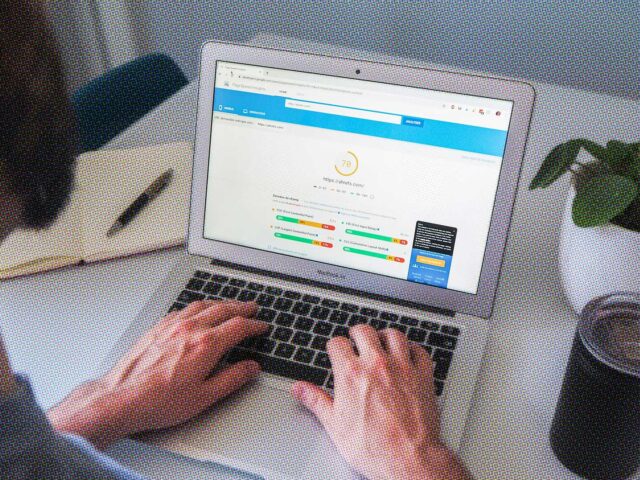
Google PageSpeed Insights (PSI) is a free tool from Google that analyses and evaluates the performance of your website. Find out here which metrics are available and how you can optimize your website performance. ... Continue readingPagespeed Insights (PSI): Turbo for your website
Search engine optimization (SEO) is a diverse and complex area of online marketing that has developed significantly in recent years. While the focus used to be mainly on on-page and off-page measures, technical SEO is becoming increasingly important today. Find out more here! ... Continue readingTechnical SEO: A basic requirement for successful ranking
08 min
Want to learn more about how to optimize your site for search engines?
You are currently viewing a placeholder content from Hubspot Embedded Content. To access the actual content, click the button below. Please note that doing so will share data with third-party providers.
You are currently viewing a placeholder content from HubSpot. To access the actual content, click the button below. Please note that doing so will share data with third-party providers.
You are currently viewing a placeholder content from Hubspot Meetings. To access the actual content, click the button below. Please note that doing so will share data with third-party providers.