


Opt-In
The opt-in process is known from permission marketing. How you can usefully integrate it into your marketing concept, you can find out here! ... Continue readingOpt-In

When you ask Google’s AI Mode a complex question, it doesn’t run just one search in the background – it runs many. This process is called query fan-out. Here you’ll learn what’s behind it, how the technique works and what it means for your SEO strategy.
Query fan-out is a technique AI-powered search systems use to break a user query down into multiple sub-queries. These sub-queries run in parallel. The results are then combined into one coherent answer.
Put simply, the process runs in four consecutive steps:
The principle is similar to Retrieval-Augmented Generation: the AI doesn’t generate its answers solely from its fixed training knowledge but draws on live content freshly retrieved from the web.
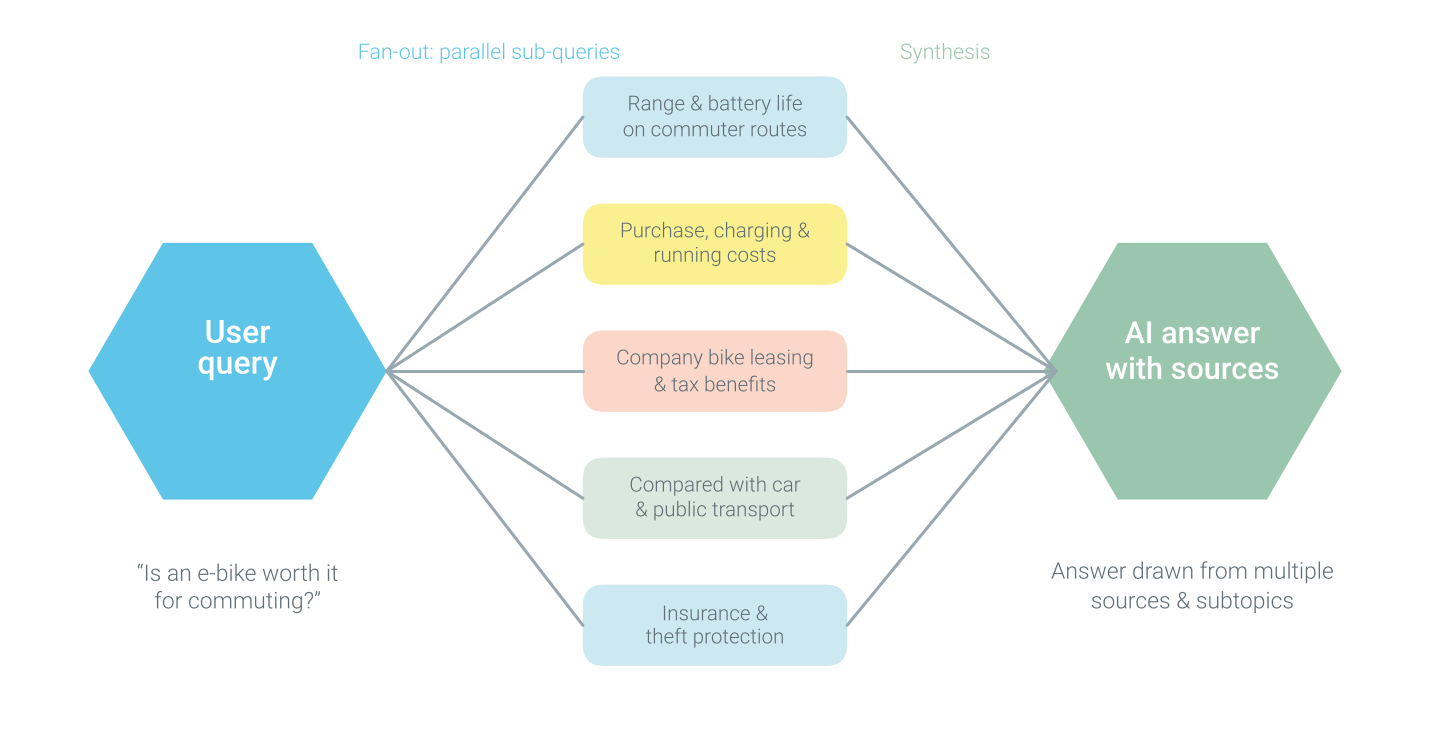
Let’s say you ask: “Is an e-bike worth it for commuting?”
A single search can hardly answer this question in full. With query fan-out, the system automatically breaks down the search intent in the background and generates sub-queries such as these:
The final answer brings together the findings from all these areas clearly in one place and refers to the respective sources.
Note: Google doesn’t disclose which sub-queries are actually generated – the example is for illustration only.
Fanning out searches is a key feature of modern web search and is used by several systems:
For users, query fan-out above all means more comprehensive answers:
Instead of running several searches one after another, the system shows you different aspects of your question at a glance – including relevant follow-up questions. According to Google, this lets AI answers display a broader and more diverse selection of links than classic search.
For website owners, this changes the rules of the game. A page doesn’t necessarily have to rank for the original search query to appear in an AI answer. It is often enough for it to answer a relevant sub-question precisely. As a result, in-depth topic coverage and precise answers are becoming more important than individual keywords.
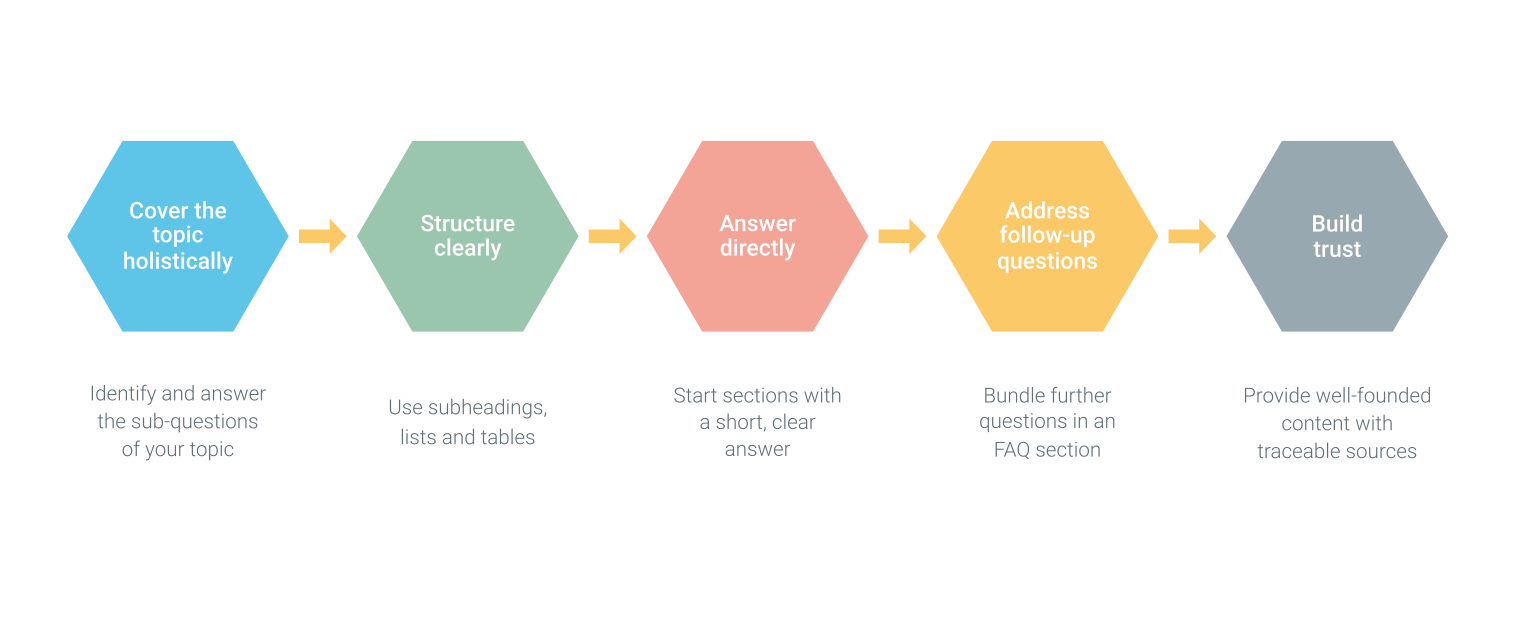
Google emphasizes that AI Overviews and AI Mode require no special optimization and no special markup. The familiar SEO fundamentals still apply. Even so, the principle of query fan-out suggests some useful priorities, which are also pursued in Generative Engine Optimization (GEO):
A query fan-out tool helps you estimate which sub-queries might arise for a topic. These generators or simulators have a language model formulate possible fan-out queries. A well-known example is the free tool Qforia by iPullRank, which requires an API key for Google Gemini. Important: the results are approximations, not Google’s actual queries. They mainly serve as a source of ideas for your analysis, for example alongside classic keyword research.
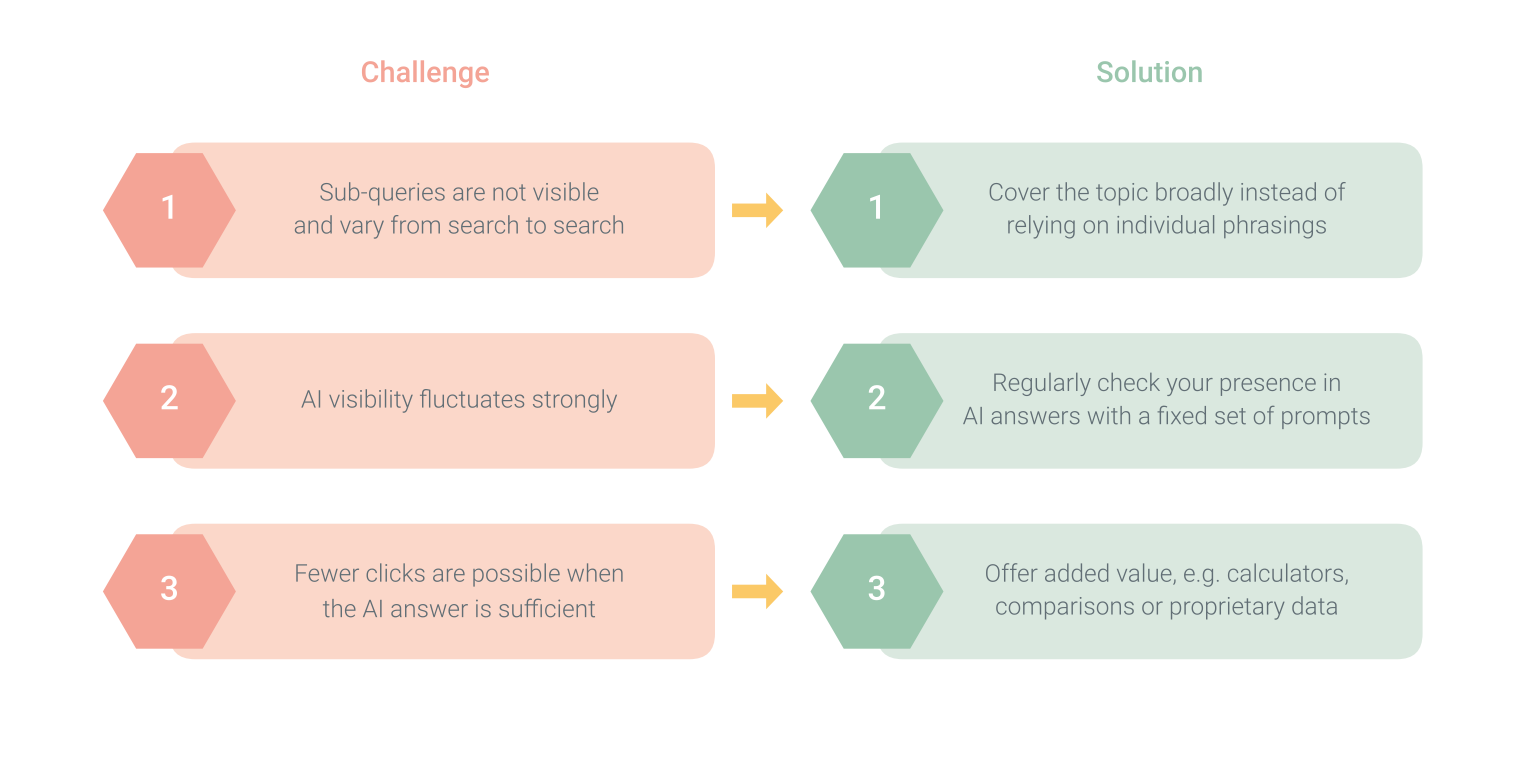
Query fan-out brings opportunities, but also new uncertainties:
An experiment by Semrush shows how unpredictable the field is: after four articles were optimized for fan-out queries, the number of citations in AI answers rose from two to five. At the same time, other visibility metrics fluctuated considerably. Since the sample was small, no general conclusions can be drawn from it yet.
Query fan-out breaks a search query down into many sub-questions and puts the answers together like a puzzle. For SEO in practice, this means it’s not just the main keyword that counts, but answering a topic completely. Clearly structured, well-founded content has the best chance of appearing as a source in AI answers. A targeted GEO audit can show how visible your own brand already is there.
The opt-in process is known from permission marketing. How you can usefully integrate it into your marketing concept, you can find out here! ... Continue readingOpt-In
A SEO analysis provides information about the strengths and weaknesses of your website. You can find out, how it works, here! ... Continue readingSEO analysis
Yield Optimization means optimizing the yield and tries to optimize the available resources in order to increase sales. In this way, expenditure is invested in the best possible way and channels used are optimally utilized for sales. ... Continue readingYield Optimization
Would you like to learn more about exciting topics in the industry?
You are currently viewing a placeholder content from Hubspot Embedded Content. To access the actual content, click the button below. Please note that doing so will share data with third-party providers.
More InformationYou are currently viewing a placeholder content from HubSpot. To access the actual content, click the button below. Please note that doing so will share data with third-party providers.
You are currently viewing a placeholder content from Hubspot Meetings. To access the actual content, click the button below. Please note that doing so will share data with third-party providers.
More Information


