


Voice Search
Voice search takes search engine optimization to the next level. Find out how to prepare your content for this here! ... Continue readingVoice Search

Cross Channel Advertising is advertising that deliberately connects multiple channels such as search, social media, display, video or email. Instead of many isolated individual campaigns, your target audience experiences a consistent message that evolves from channel to channel. Here you’ll learn how cross-channel campaigns work, how they differ from multichannel and omnichannel, and how to measure their success.
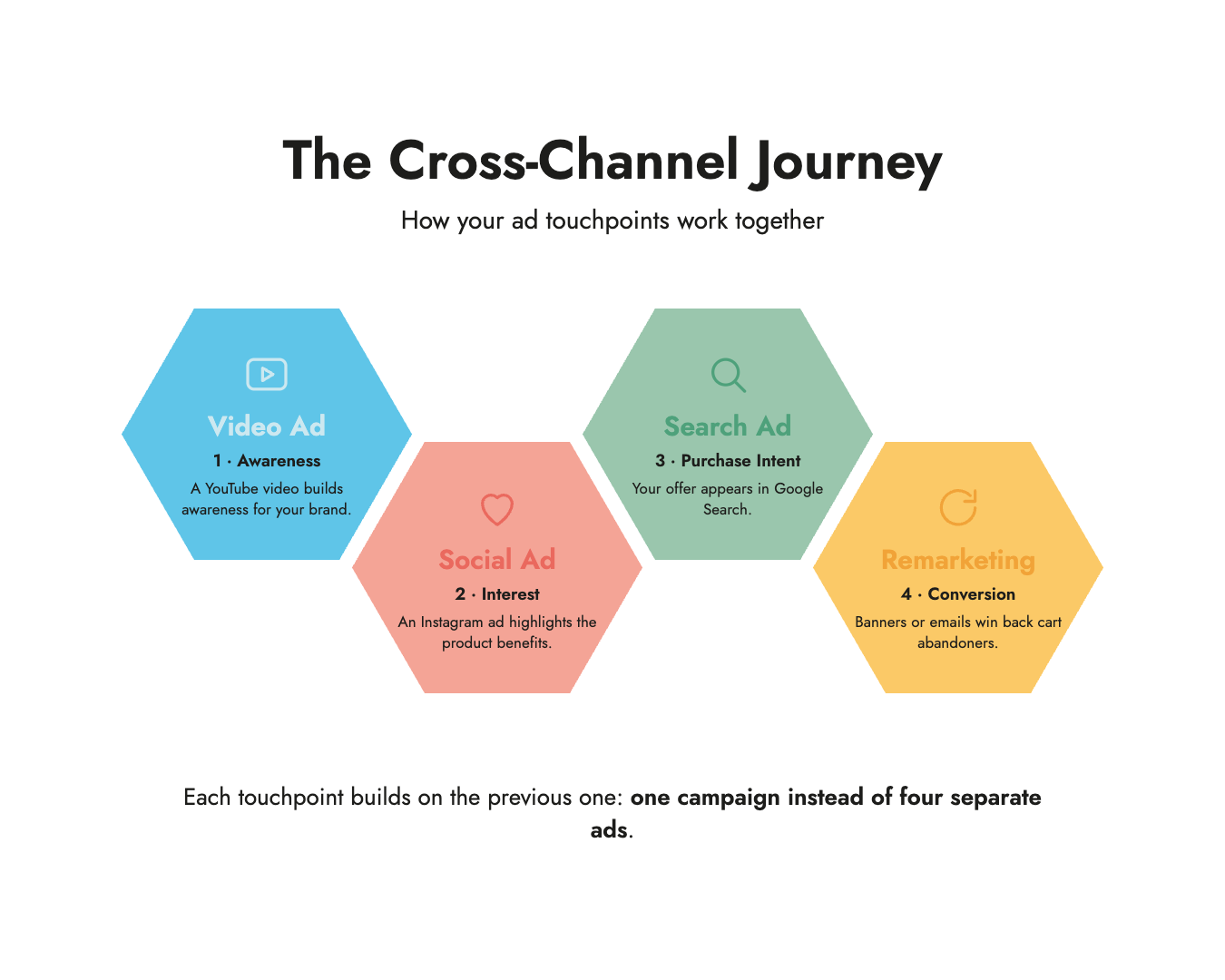
Cross Channel Advertising connects multiple advertising channels through shared content and data. Each touchpoint builds on the previous one: someone who has watched your YouTube video will later encounter you in Google Search or on Instagram with a matching follow-up message. Related terms include cross ads, cross-channel campaign, cross-media advertising and cross-channel promotion.
Cross Channel Advertising doesn’t mean advertising on as many channels as possible. What matters is that the channels are connected and that each ad builds on the previous touchpoint.
Three building blocks need to work together: a consistent message, a shared data foundation and coordinated campaign management. The following example shows what this can look like in practice. You can adapt the order and the channels to your target audience:
In addition to search, social, display and video, you can also include retail media, connected TV, newsletters, offline media and, since 2026, ChatGPT.
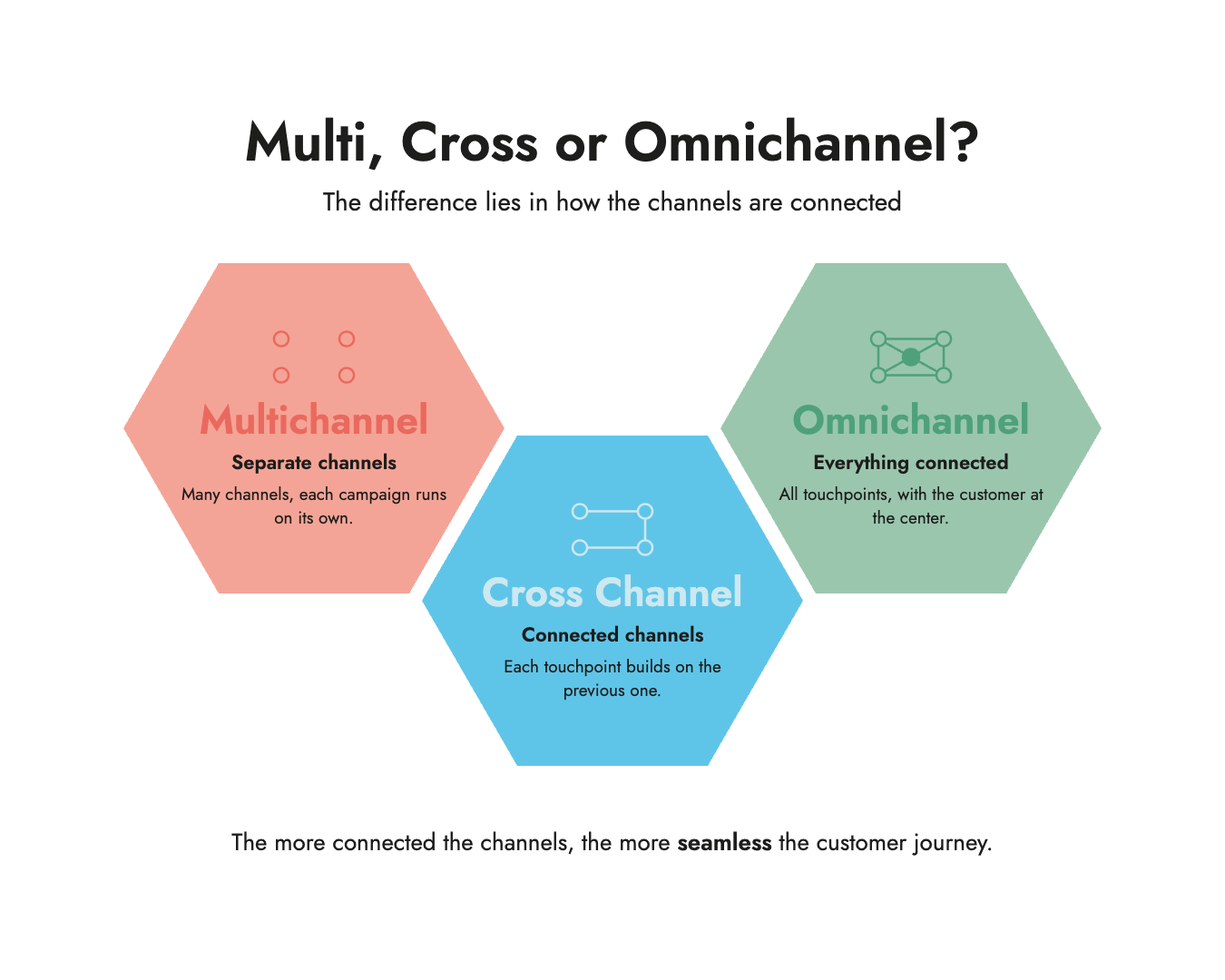
The difference lies in how the channels are connected:
Criterion | Multichannel | Cross Channel | Omnichannel |
|---|---|---|---|
Connection | none, channels run separately | channels are connected | all touchpoints integrated |
Data foundation | separate for each channel | shared | single customer view |
Message | independent for each channel | building on each other | personalized in real time |
Focus | Reach | Customer journey | Overall customer experience |
Cross Channel Advertising is therefore the bridge between multichannel and omnichannel.
Purchase decisions are made across multiple channels. In a Harvard Business Review study of around 46,000 customers, multichannel shoppers spent 4% more per purchase in store and 10% more online than single-channel shoppers.
Example: An outdoor store promotes its new hiking boots with a YouTube video. Viewers then see an Instagram ad, a search ad when they search for “waterproof hiking boots” and, if they abandon their purchase, a remarketing banner offering free shipping.
Customers often see several ads before they buy. If you attribute success only to the last ad before the purchase, you underestimate channels like video or social media, which have an impact earlier in the customer journey. Three methods give you a more realistic picture:
Key metrics include ROAS (revenue per euro of ad spend), CPA (cost per purchase or lead) and the conversion rate.
So that you don’t have to keep track of campaigns and metrics for each channel separately, cross channel advertising software can help. It brings multiple channels together in one interface, from campaign management to reporting. Typical examples include:
Cross Channel Advertising turns many individual ads into one cohesive campaign. Start with clear goals, two or three well-connected channels and clean tracking. You can then add more channels step by step.
Voice search takes search engine optimization to the next level. Find out how to prepare your content for this here! ... Continue readingVoice Search
Whitepapers are informative documents from companies, but they can also be used in marketing to attract customers. Learn more here! ... Continue readingWhitepaper
What does traffic mean? And what is the difference between organic and paid traffic? We'll tell you! ... Continue readingOrganic Traffic
Want to learn more about exciting topics in the industry?
You are currently viewing a placeholder content from Hubspot Embedded Content. To access the actual content, click the button below. Please note that doing so will share data with third-party providers.
More InformationYou are currently viewing a placeholder content from HubSpot. To access the actual content, click the button below. Please note that doing so will share data with third-party providers.
You are currently viewing a placeholder content from Hubspot Meetings. To access the actual content, click the button below. Please note that doing so will share data with third-party providers.
More Information


